27/02/2015

visual language: line of sight


Mirai-Chan by Kawashima Katori

There are a few lines of sight in this image, all of which, predominantly, lead towards the girl. There are three lines, not unlike an isometric angle. Two are made up of rows of people, and could lead the eye out of the image. However, the gaze of two of the closer people leads us to the girl. The vertical line of the doorframe is almost exactly central, and creates a barrier between the girl and the people to the left.

The eye may be drawn to the girl, Mirai, simply because she is the focus of this book of photographs. We also follow her gaze too, to an ashtray, but as that is of little importance we may go back to her face. Her intense concentration may leave the viewer gazing hard at the ashtray too, wondering of what importance it has.

The image is very busy and it is easy for Mirai to get lost in the image. Her dress is a bright blue but the rest of the image is also made up of similar colours. However, I think the busy-ness is a key part of the image, and emphasises her smallness and vulnerability as a child.

TRANSPORT


Here is the image I created as part of the line of sight task. I enjoyed making the image, particularly in the painting process but feel that the final result is weak, particularly in terms of composition and line of sight. My aim was for an interesting curve of cars on a road but the curve looks messy and flat. A more dynamic and smooth curve could have made this image a lot more interesting. The cars are also very un-car-like looking! 


24/02/2015

visual communication: artists who work with shape

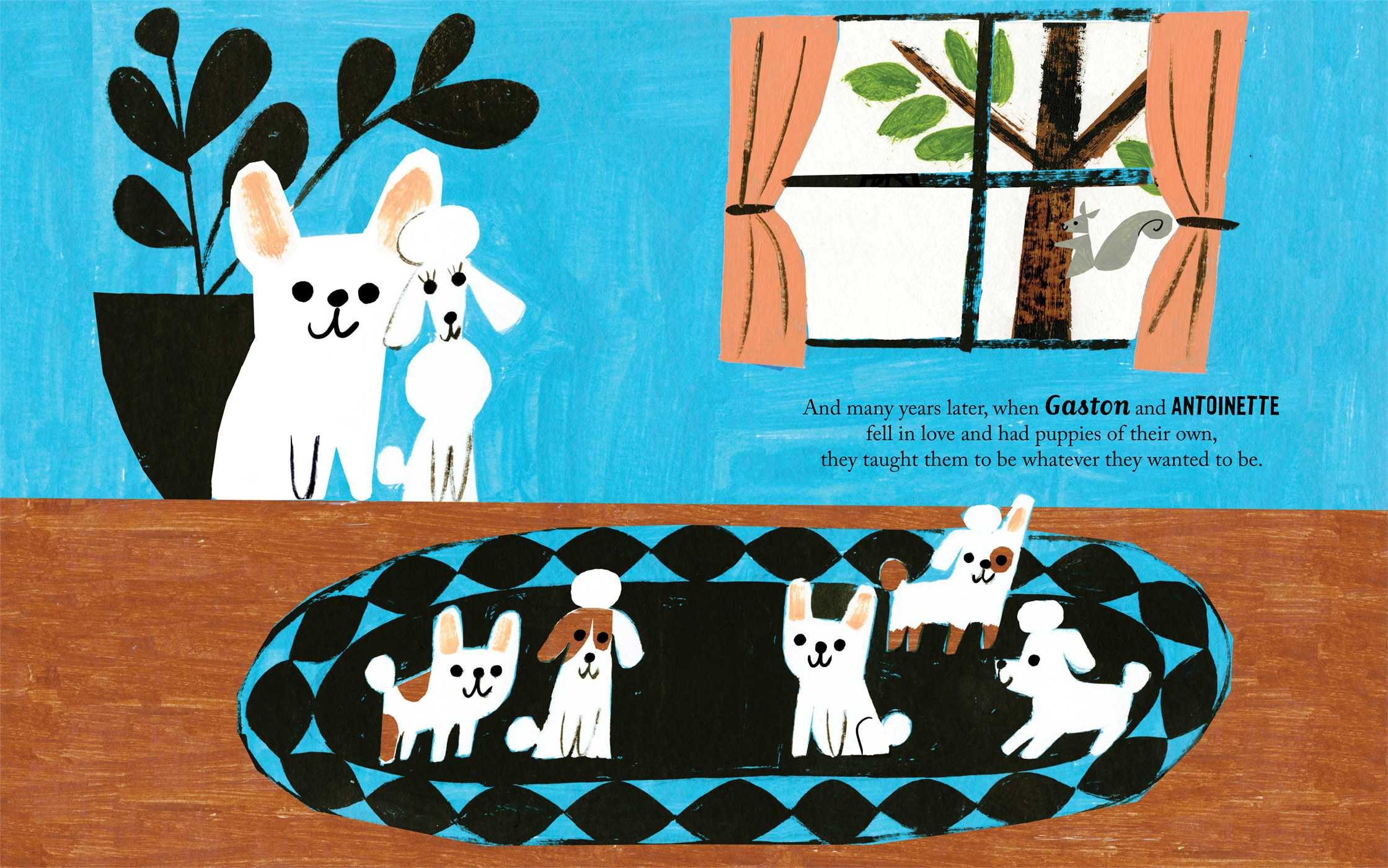
Christopher Robinson: Gaston


Robinson's tone of voice feels very reminiscent of mid-century illustration. I am particularly fond of his use of negative space as a tool of shape, and the simple but bold colour choices. The heavy use of black in the lower image could be overpowering but is used in a way that brings out the other colours. It also works as a tool to move the eye around the composition.

Whilst I very much admire this use of shape and colour I think what I like most about it is the natural textures that come through with the use of paint. Otherwise it could look very flat, and I realise that this would be the result if he had used Adobe Illustrator too!

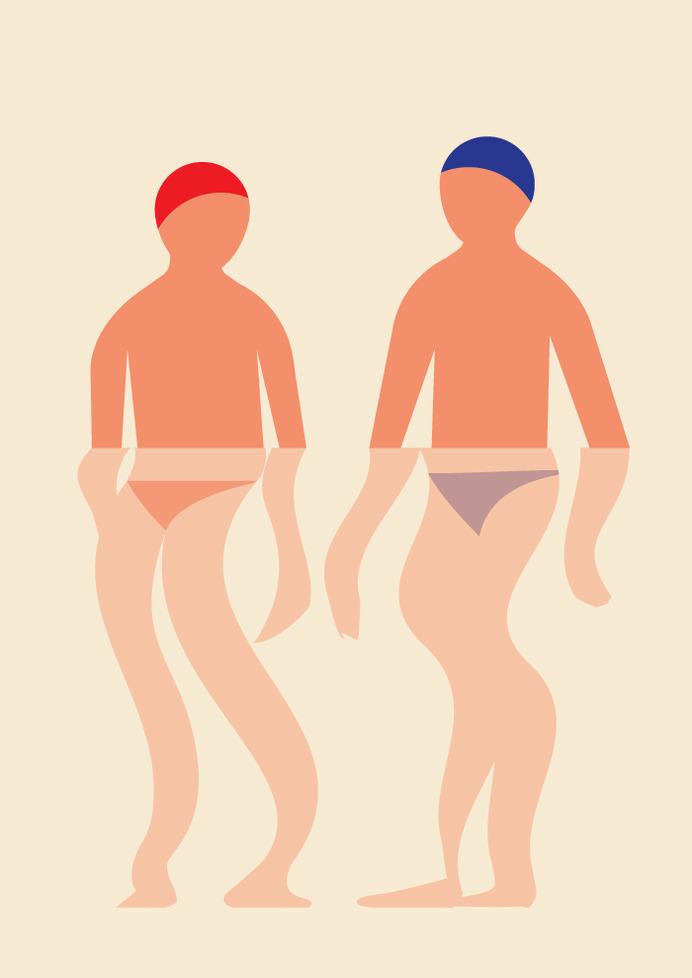
I suppose it is ok to embrace the simple perfections of the software, for example, more like Robert Bailey. But it is not impossible to create wacky and fluid shapes in the programme, as seen in J.Otto Seibold's storybooks.

Robert Bailey: Above and Below


J.Otto Seibold: Olive the Other Reindeer


22/02/2015

visual communication: FINAL GIFS


I balanced some of the image out. Laika's head now covers interior posts instead of them being conflicting objects. The shadow on the chair has been moved to avoid being confused with the paw and its shadow. 

I would have liked to have changed the background to create the illusion of more movement, but didn't plan my time well enough to do this. I would have tried using planes of motion and more moving objects. 

However, in this gif's simplicity I think there is a sense of calmness, and I like that, even if it wasn't something I had planned. Although the background is busy, there is a contrast in the slow moving and fairly still interior and because of the viewpoint the viewer may feel like they are there inside the ship too, watching the stars.


I tried adding a wink to the leaf rotation, but it looks more like an eye twitch! A wink is a different movement to a single eye blink it seems. I think there would have to be more movement in the facial features and not just the eyes.


It is a simple animation but I am pleased with the smoothness of the cycle. It was more complicated to make than I first imagined, With this gif I just aimed to make a silly and daft animation that would hopefully make someone smile, and I think I achieved this!


This is the most complex of my animations but I do not think it is the best of the series by any means! I enjoyed working with a more complex animation and am glad to have practiced these skills but I think I sacrificed good image making by concentrating too much on the animation. 

The animation itself is a little rough and wobbly, but I think in a way it adds charm. But there is something about the composition that bothers me. It's very central and flat on and looks boring as a result I think. I would have liked to have explored more angles, for example rotating the sun or moving the camera around the eye. It's not an excuse, but I do suppose that gifs are meant to be quite simple sequences. If I had done more rotation angles I may have had to cut down on the sequence in other ways. 


visual communication: sun in your eyes


My main problem is finding a background for the gif. I added some clouds, which I suppose make sense with the context of the sun and makes the eye look even more surreal.


I tried adding a gradient to the background, but when saving for web it created unsightly colour blocks. 


I've added a moving background as another hopeful point of interest. However, I've had to adjust the timings one each frame to be the same so the movement is consistent.


21/02/2015

visual communication: monoprint workshop


The monoprint workshop was fun to do but I wasn't too interested in the results. The textures themselves were interesting but I didn't like the muddy colour buildup. Perhaps I could take the texture digitally and apply it to work without using the colour.

Although one of the possible intentions of the session was to use these images in the gifs I think monoprint lends itself far more to abstract concepts than figurative images. I don't have much interest in the abstract right now, but if I do, I will consider monoprinting again, maybe with less colours involved. I think a black and white image could be interesting.


18/02/2015

visual communication: the third gif

I have been reconsidering what to make for my third gif. The intended third gif was the matching couple sequence. 


It is quite static, and essentially a series of six illustrations with little animation. I've been experimenting with gif making at home, and am finding my interests are starting to lie in more fluid motion making (despite my frustrations with the leaf gif).

small practice animations

Also, the space dog gif is quite a static image, and making something with more motion would add more variety to my series.


So instead I am considering making my sun in eyes gif. It is quite simple in character, image and idea so I will be able to invest more time into the motion.  This is the beginning storyboard but I may also make it more complicated.


Adobe Illustrator workshop


using line as part of design


using the bring forwards / backwards functions to strategically layer objects


things become / look a lot more interesting once you play with anchors


save files by using the export function


The challenge brief was to illustrate something around culture, I began drawing a swan appreciating an art gallery. One of the things I find odd about using Illustrator is that there doesn't seem to be a sketching function or somewhere to plan a drawing.

16/02/2015

visual communication: disco leaf animation process

0.1 second delay


0 second delay

I might make the side profile leaf even thinner to emphasise his leafiness. More frames will also make a smoother animation.


I couldn't figure out the mechanics of a spinning leaf so made real life maquette to help!

leaf rotates two ways
It's hard to tell that the leaf is rotating two ways, and I'm not sure it adds anything to the gif except for the file size and subsequent slight loss of detail.

leaf rotates one way


leaf with grassy semi-static background

leaf with hands
I was struggling to think of a background for my leaf, particularly as he will overlap almost anything in the frame as he covers so much through the loop. I think I have settled for the semi-static grassy background. I like how the grass blades stop moving as he does, they move and dance like him almost become little dancing nature characters themselves.